
How Can Civil Contractors in India Reduce Project Delays Using ERP Software?
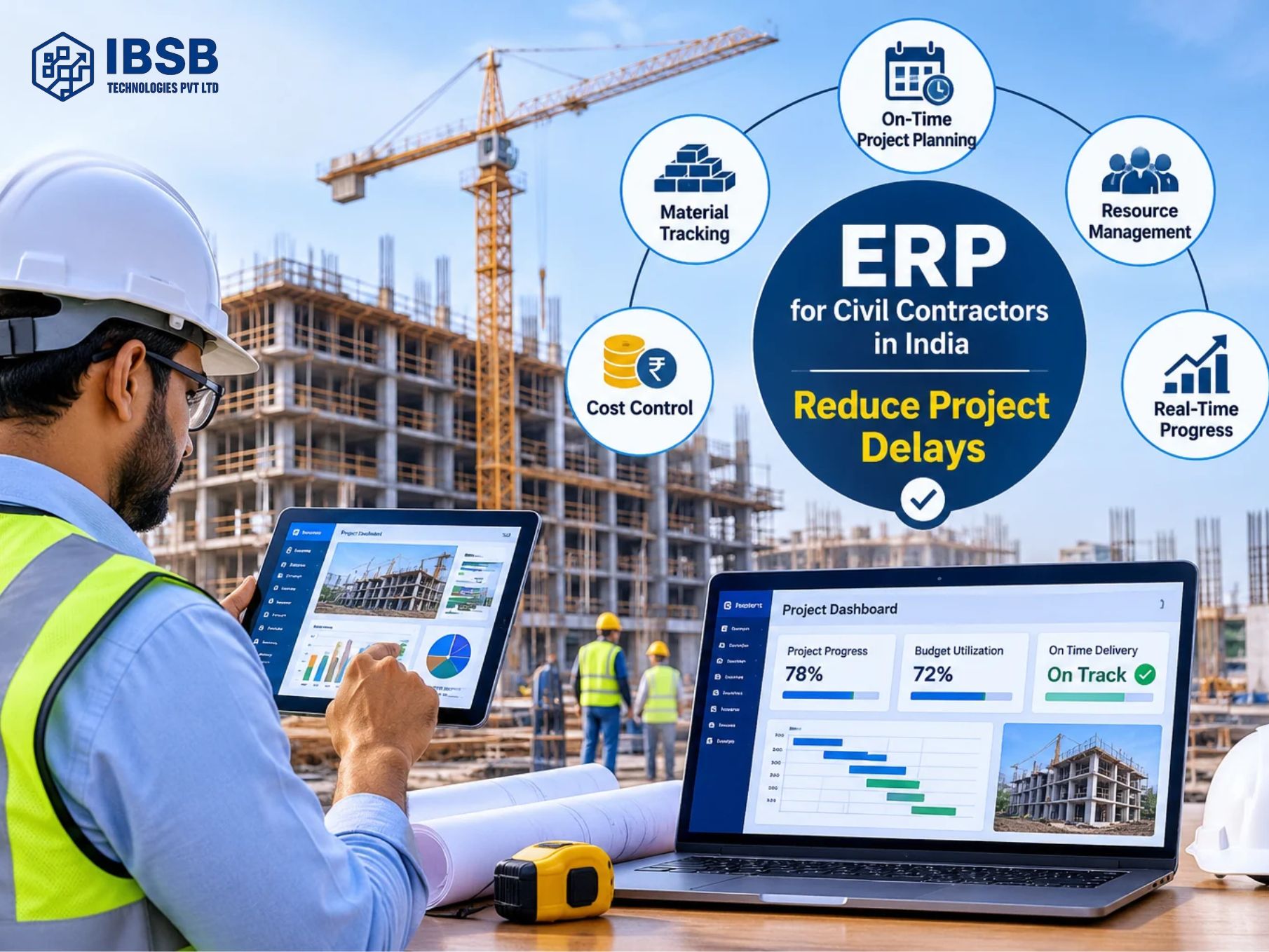
Every civil contractor in India knows the sinking feeling of watching a deadline slip. A delayed shipment of cement, a crew waiting without instructions, a budget that runs dry halfway through a pour, and suddenly a profitable project turns into a penalty clause. The good news is that most of these problems are not caused by bad luck. They come from scattered information and manual coordination. This is where ERP for civil contractors in India changes the game, bringing schedules, materials, labor, costs, and communication into one connected system. Whether you build highways, residential towers or drainage networks, the right software gives you control before problems become expensive. In this guide, we explain why civil projects get delayed and how ERP helps you finish on time, within budget and with far fewer surprises.
Construction Project Management Software and the Real Causes of Delay
Before fixing delays, it helps to understand where they begin. Across roads, bridges, housing complexes, and industrial sites, four causes show up again and again, and most of them are connected to each other.
Material Shortages
Cement, steel, sand and aggregates must reach the site at exactly the right time. When purchase requests travel through phone calls and paper slips, orders get placed late, quantities get miscalculated and stock runs out without warning. A single missing consignment can halt an entire shuttering or concreting cycle, and the crew waiting beside it still has to be paid. Price changes and supplier delays make the situation even harder to predict.
Poor Resource Planning
Machines, operators and skilled labour are never available in unlimited supply. Without a shared view of who is working where, one excavator gets double booked while another sits idle at a different site. Crews are moved at the last minute, and the schedule absorbs the cost of every unplanned shift. Over time, weak planning also leads to overtime costs and tired teams who make more mistakes.
Budget Issues
Cost overruns rarely announce themselves. Small variations in material rates, wastage and extra labour hours pile up quietly until the project manager notices the gap at month end. By then, vendor payments are stuck, suppliers slow down deliveries and work on site loses momentum. Poor cash flow visibility is one of the quietest causes of delay in civil construction.
Communication Gaps
Site engineers, procurement teams, accounts staff and head office often work from different spreadsheets and chat groups. Drawings change, approvals get lost and instructions reach the site late. Each misunderstanding creates rework, and rework is one of the most expensive forms of delay because it consumes both time and material twice.
ERP for Industrial Equipment in India: Control Over Machinery and Materials
Civil work runs on heavy machinery such as excavators, concrete mixers, cranes and batching plants, and every hour of idle equipment is money lost. This is where ERP for civil contractors in India adds real value, because it treats machines, stock and manpower as connected resources rather than separate lists. Instead of reacting to shortages and breakdowns, your team plans for them in advance.
Real-Time Material Tracking
ERP software records every material request, purchase order, goods receipt and site issue in one place. Store managers see live stock levels, and procurement teams receive automatic alerts when a critical item falls below its minimum level. Instead of chasing suppliers after a shortage, your team reorders before the shortage occurs. Material wastage also becomes visible, because issued quantities can be compared against what the work actually needed. This simple discipline protects both the schedule and the margin.
Smarter Allocation of Machines and Manpower
With a central resource calendar, planners can see which equipment and crews are free, which are committed and which need maintenance. Scheduled servicing prevents sudden breakdowns, and usage logs show which machines truly earn their keep. Companies such as IBSB Technologies build ERP solutions that give contractors this clarity, so resources move to the right site at the right time without guesswork. Fewer idle hours and fewer emergency rentals mean steadier progress on every project.
Construction Project Management Software for Schedules, Costs and Teams
Once materials and resources are managed effectively, construction project management software helps businesses coordinate project schedules, monitor costs and manage teams efficiently. It provides better control over daily activities, work progress and resource allocation, helping construction companies complete projects on time and within the planned budget.
Managing Project Schedules
Planners break the project into phases and tasks, assign dates and link dependencies, so a slip in one activity shows its effect on every other activity immediately. Milestones, progress percentages and delays appear on one dashboard that everyone can read. Key schedule features include:
- Task wise timelines with dependency tracking
- Automatic alerts for overdue activities
- Planned versus actual progress comparison
- Milestone based billing linked to site progress
- Daily progress updates from the field
These tools help managers act while a delay is still small, long before it becomes a missed handover date.
Monitoring Costs
Every purchase, labour entry and equipment hour is tagged to a project and a cost code. Budget against actual figures update continuously, so overspending is flagged in days rather than months. Running bills, vendor payments and cash flow forecasts stay accurate, which keeps suppliers confident and deliveries steady. When leadership can see profitability by project, tough decisions about pricing, procurement and staffing become far easier.
Coordinating Teams Efficiently
ERP replaces scattered chats and spreadsheets with shared records. Engineers log site progress, procurement sees requirements instantly and accounts teams view approvals without waiting for forwarded files. Document control keeps the latest drawings in one place, and approval workflows route requests to the right person, so decisions do not sit unattended in someone's inbox. Head office and site teams finally work from the same facts, which removes most of the confusion that causes rework.
ERP for Industrial Equipment in India and the Case for Better Visibility
The strongest benefit of ERP is not any single feature. It is the shared and accurate picture of the entire business that every decision maker can see at the same moment.
Improved Project Visibility and Fewer Errors
Management dashboards show progress, spend, stock and equipment use across all sites in one view. Because data is entered once and flows automatically to purchasing, stores and accounts, duplicate entries and mismatched figures largely disappear. Providers like IBSB Technologies design role based dashboards so directors see the big picture while site engineers see their daily tasks. Fewer manual entries mean fewer billing disputes, fewer stock mismatches and cleaner audits.
Supporting Timely Project Completion
When risks appear early, corrective action is cheaper. Managers can reassign crews, expedite a purchase order or renegotiate a delivery date before the schedule is damaged. Accurate records also support claims, handovers and client reporting, so projects close cleanly instead of dragging through disputes. Over several projects, historical data guides better estimates and more realistic bids, which means you commit to deadlines you can actually meet.
Conclusion
Project delays in civil construction are rarely caused by a single failure. They grow from material shortages, weak resource planning, budget leaks and poor communication, and each problem feeds the next one. By adopting ERP for civil contractors in India, contractors gain one reliable system for scheduling, tracking, costing and coordination. The result is better visibility, fewer errors and a much higher chance of handing over projects on the promised date. Contractors who invest early build a lasting advantage, because every completed project adds data that makes the next one more predictable. If you are ready to bring that control to your sites, IBSB Technologies can help you choose and implement the right solution for your business.
Frequently Asked Questions:
1. What is ERP software in civil construction?
It is a unified system that connects scheduling, procurement, inventory, equipment, costing and accounting so every team works from the same live data.
2. How does ERP reduce delays in construction projects?
ERP shows shortages, cost overruns, and schedule slips early, so managers can fix problems before they stop work on site.
3. Is ERP suitable for small and mid-sized civil contractors in India?
Yes, modular ERP lets smaller firms start with core features and add more modules as their projects and teams grow.
4. What features should civil contractors look for in an ERP system?
Look for project scheduling, material and inventory control, equipment tracking, cost monitoring, billing and mobile access for site teams.
5. How long does it take to implement ERP for a construction company?
Most implementations take a few weeks to a few months, depending on company size, data readiness and the number of modules.