
Which Inventory Management ERP in Delhi NCR Is Right for Your Business
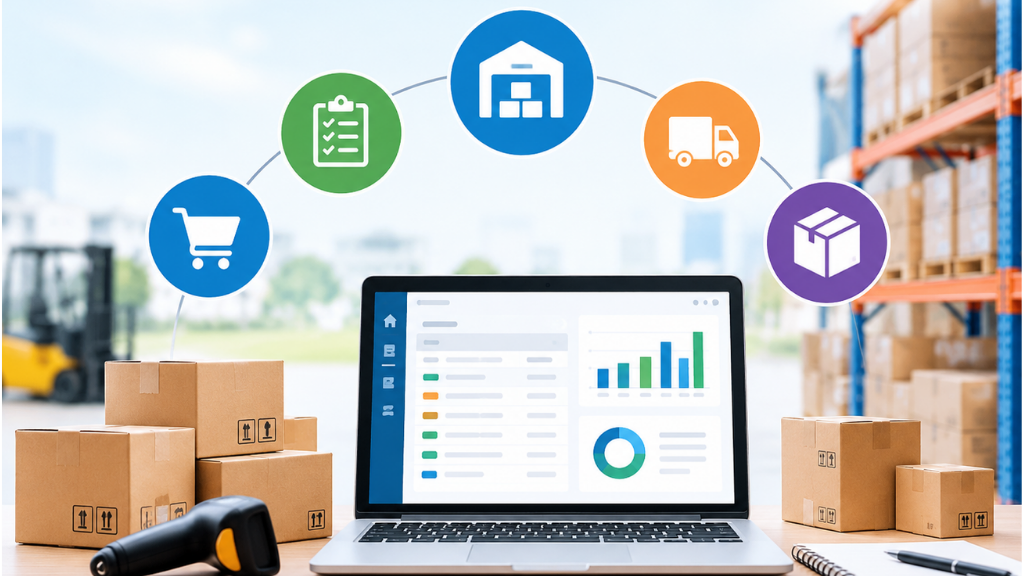
Stock sheets that never match the shelf, purchase orders raised twice, and production lines waiting for a part that was supposed to be in the store. If this sounds familiar, the problem is rarely your team. It is usually the tools. Choosing the right inventory management ERP in Delhi NCR can bring every purchase, issue, transfer and dispatch into one live system, so you always know what you hold and what you need. But the market is crowded, and the best fit for a factory in Faridabad is not always the best fit for a contractor in Gurugram. This guide walks you through what to compare, which questions to ask, and how to shortlist a partner with confidence, whether you run a small workshop or a growing multi-site business.
How a Project & Contractors ERP Solution in India Keeps Site Stock Under Control
Why Project Stock Is Different from Warehouse Stock
A warehouse typically operates from one location with a steady flow of goods, while construction projects involve multiple sites, subcontractors, and frequent material transfers. Cement, pipes, cables, fittings, and tools may move between the main store and different project locations within the same week. Without centralized tracking, one site may overstock materials while another faces shortages, causing costly delays. A Project & Contractors ERP Solution in India helps businesses track inventory across multiple sites, allocate materials to specific projects, and monitor expenses against budgets. Unlike basic inventory tools, it connects every material issue to a project code, budget line, and responsible person, giving contractors better control over stock, costs, and project timelines.
What to Check Before You Shortlist
Start with the basics. Can the system raise a material request from a site, route it for approval, convert it into a purchase order, and record the goods receipt at the right location? Next, look at inter-site transfers, returns and scrap. Then check whether issued material automatically updates project cost. If your finance team still needs spreadsheets to see what a site has consumed against budget, the software is only doing half the job. Finally, ask about mobile access, because site engineers rarely sit at a desk. For a deeper look at stock control basics, read our guide on Stock Maintenance ERP software in India before you compare vendors.
Common Mistakes Contractors Make
The most frequent error is buying software designed for shops and then forcing site teams to adapt. Another is skipping data cleanup, so duplicate item names and wrong units follow you into the new system. Many contractors also forget to involve site supervisors in the trial, which means the people who issue material every day never learn the tool properly. Fix these three issues early and adoption becomes far easier.
How a Material Request Should Flow
The best systems follow a simple path. A site engineer raises a request on a phone, the project manager approves it, purchase converts it into an order, and stores records the receipt against the same project. Every step leaves a trail, so no one has to ask who ordered what or why. This flow also helps you spot repeat requests and bulk-buy common items at better rates. When you see a vendor demonstrate this path in minutes rather than hours, you know the design is built for real field work.
Choosing an ERP for Manufacturing Companies Near Delhi Starting with Your BOM
Why the Bill of Materials Comes First
Factories around Faridabad, Noida, Gurugram, Ghaziabad and Manesar run on the Bill of Materials. Every finished part depends on raw material, components, job work and process steps, and a mistake in any of them reaches the customer as a delay. IBSB Technologies builds its manufacturing modules around this reality, linking BOM, production planning, purchase and stores so that a sales order can instantly show what is available and what must be bought. When you evaluate options, ask each vendor to demonstrate a live multi-level BOM, not a slide.
Features Worth Asking For
Use this checklist during every demo:
- Multi-level BOM with revision control
- Batch and serial tracking for full traceability
- Job work challans with vendor stock visibility
- Reorder levels with automatic purchase suggestions
- Quality checks at receipt, in process and before dispatch
- Barcode or QR support for faster stock movement
Do not be dazzled by long feature lists. Ask which of these your team will use in the first ninety days, and make sure those work smoothly before anything else.
Planning, Purchase and Stores Must Talk to Each Other
Stock errors in factories usually begin at the handoff between departments. Planning releases a work order without checking availability, purchase buys what is already lying in a corner, and stores issues material without a record. A connected system removes these gaps. When planning sees live stock, purchase sees real shortages, and stores posts every movement as it happens, you cut excess inventory, shorten lead times and stop emergency buying at premium prices. Ask vendors to show this chain from sales order to dispatch in one continuous demo.
Costing, Wastage and Scrap Control
Raw material is often the largest cost in a factory, yet scrap and rework quietly drain profit every month. A proper system compares planned consumption with actual consumption for each work order and highlights the difference. You can then see which machine, shift or vendor lot is causing the loss. Over time, this data helps you quote more accurately, negotiate with suppliers using facts, and set realistic production targets that your team can meet without rushing.
Why a Project & Contractors ERP Solution in India Must Also Manage Vendors and Costs
Vendor Control Protects Your Margin
Contractors work on thin margins, and material is usually the biggest cost. A good system keeps vendor rates, delivery history and payment status in one place, so purchase teams can compare quotes quickly and avoid paying more than agreed. It should also flag overdue orders, so nobody discovers a missing consignment on the day of installation. Look for approval limits that match your internal rules, because the person raising an order should not be the only person approving it.
Reports Your Directors Will Actually Read
Dashboards should answer simple questions fast. How much stock sits at each site? Which projects are over budget? What is pending from vendors? What will we need next month? When these answers appear without a phone call, leaders stop chasing updates and start making decisions. IBSB Technologiee dashboards across projects, purchase and stores, which helps owners see exposure early rather than at month end.
Compliance and GST Readiness
Material moves across states, vendors supply on credit, and invoices must match what you receive. Your system should support GST billing, e-way bill details, purchase invoice matching and clear audit trails. This saves hours during returns and avoids disputes with suppliers. Ask whether tax updates are included in support, so you are never left editing settings after a rule changes.
Subcontractor and Billing Tracking
Large projects rely on subcontractors, and their work must be measured, certified and paid on time. Choose a platform that records work done, links it to running bills and shows what remains payable. This prevents double payments and keeps relationships healthy. It also gives your accounts team a clean basis for client invoicing, retention tracking and final settlement, so cash flow stays predictable even when several projects run at once.
Matching an ERP for Manufacturing Companies Near Delhi to Your Budget, Support and Growth
Look Beyond the Licence Price
The cheapest quote is rarely the cheapest outcome. Ask what is included: data migration, user training, customisation, cloud hosting, updates and support hours. A local vendor can visit your plant, understand your floor and respond the same day, which matters more than most buyers expect. Check references from companies of your size and industry, and ask how long implementation actually took. Cloud deployment suits multi-site businesses, while on-premise may suit those with strict data policies. Either way, insist on a clear go-live plan.
Implementation and Training Matter
Even excellent software fails when training is rushed. Ask how the vendor handles data migration, role-based access, user training and the first month after go-live. A phased rollout, starting with stores and purchase and then adding production, finance and reporting, reduces risk and builds confidence. Appoint one internal owner who coordinates with the vendor, collects feedback and keeps the team on schedule. Strong ownership inside your company often decides success more than any feature.
Run a Simple Decision Process
Write down your top five problems, shortlist three vendors, and give each the same real scenario to demonstrate, such as receiving material, issuing it to a job, and reporting cost. Score them on fit, ease of use, support and total cost. Involve the store keeper and the purchase executive in the demo, because they will live with the system daily. A tool that managers love and operators avoid will fail within months.
Conclusion
The right system is the one your team will use every day. Start by mapping your stock flow, compare vendors on real scenarios, and give support the same weight as features. Take the time to document how stock moves today, because a clear picture makes every demo more useful and every decision easier to defend with your team and management. If you want a partner that understands factories, contractors and growing SMEs, talk to IBSB Technologies about a tailored demo. A well-chosen inventory management ERP in Delhi NCR will give you accurate stock, faster decisions and fewer surprises.
Frequently Asked Questions:
1. What is an inventory management ERP system?
It is a connected business system that tracks stock, purchases, production and sales in real time, so every department works from one accurate record.
2. How much does inventory ERP software cost in India?
Cost depends on users, modules, hosting and customisation, so request a scoped quote after a demo instead of relying on a fixed price list.
3. Which ERP is best for small manufacturing businesses?
Choose one with BOM, job work, stock control and GST billing that is easy to learn, and can add modules as your business grows.
4. How long does ERP implementation take?
Most small and mid-size businesses go live within a few weeks to a few months, depending on data quality, number of modules and staff training.
5. Is cloud ERP better than on-premise for stock control?
Cloud ERP suits multi-site teams needing anywhere access and lower setup effort, while on-premise suits businesses with strict internal data policies.